Virtual and AI Generated Modeling in Dubai: Agencies and Services
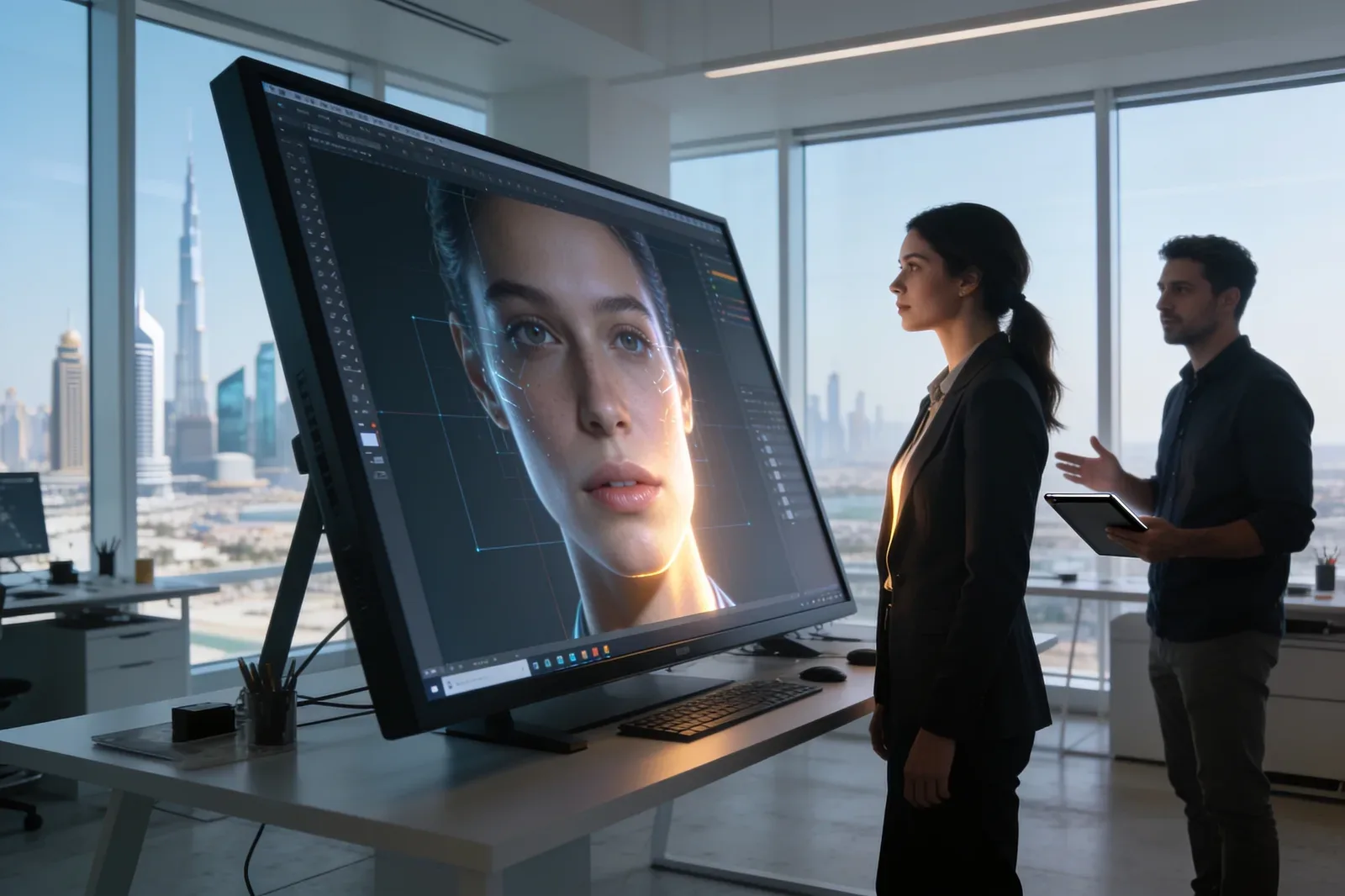
Virtual and AI-generated modelling in Dubai means using digital faces instead of, or alongside, human models: either persistent virtual influencers or one-off AI imagery made to a brief. It suits e-commerce, campaign variants and concept testing, while human talent still lead where live performance and emotion matter. Models Island books virtual models, AI-native faces we own outright, cast and styled to your brief and rights cleared, on the same brief as human talent.
What is virtual and AI-generated modelling?
The field splits into two categories. Virtual influencers are persistent digital characters who maintain consistent personas across campaigns and social channels. These avatars build audience recognition over time and function as brand ambassadors with fully controlled messaging.
AI-generated model imagery differs. These are one-off visual assets created through generative diffusion models, tailored to a specific product, season, or concept. The model does not exist beyond that image set. This suits e-commerce catalogs, rapid prototyping, and campaign variants where identity consistency matters less than speed and cost.
Dubai agencies typically deploy hybrid technology stacks. Production studios use Unreal Engine 5 and MetaHuman Creator for 3D rigging and cinematic lighting, CLO 3D and Marvelous Designer for accurate garment physics, and custom Stable Diffusion or Flux pipelines via ComfyUI for photorealistic skin and detail. Final polish happens in DaVinci Resolve and Photoshop. The result is imagery that withstands close scrutiny on luxury retail platforms.
Who provides virtual and AI modelling services in Dubai?
Providers fall into two groups: agencies that represent virtual talent, and production studios that deliver finished AI imagery.
Models Island maintains a dedicated board of virtual models, offering AI-native, rights-cleared digital talent styled to client briefs. The agency integrates these assets alongside its traditional talent roster, allowing hybrid campaigns that mix real and virtual performers. Book now to explore how their virtual board fits your next production.
The difference matters for rights. An agency that represents virtual talent licenses a consistent face for your stated usage, like a human booking; a studio delivers finished images that you commission. Models Island works the first way: virtual models are booked like human talent, with usage agreed in the quote.
How does AI modelling compare with a traditional photoshoot?
A traditional shoot needs talent, crew, studio, styling, permits and retouching, and usually takes weeks from casting to delivery. AI imagery can deliver first variants in days and iterate without a reshoot. Costs depend on scope, so compare quotes for the same deliverables.
| Factor | Traditional production | AI-generated modeling |
|---|---|---|
| Production timeline | 2–6 weeks (casting, permits, shoot, retouching) | 2–5 days for initial deliverables |
| Creative iteration | Limited by shoot day; reshoots at full cost | Unlimited variants at marginal cost |
| Scheduling constraints | Dependent on talent, crew, studio availability | None; 24-hour production possible |
| Location/visa requirements | Required for international talent | Not applicable |
| Brand safety risk | Talent behavior, contractual disputes | Fully controlled; no reputation risk |
Time savings extend beyond production. Campaigns requiring multiple ethnicities, body types, or styling directions can be generated in parallel. Global rollouts need no visa coordination or travel logistics.
Where are virtual and AI models used in marketing?
Dubai brands now deploy virtual and AI-generated modeling across several core use cases.
E-commerce product visualization. Fashion and beauty retailers generate consistent model imagery for hundreds of SKUs without the cost of repeated photoshoots. Virtual try-on pipelines allow customers to see garments on realistic digital bodies before purchase.
Hyper-personalized social content. AI-generated models can be adapted for specific audience segments, regional modesty preferences, or seasonal themes without reshooting. Brands For Less Group launched the region's first complete AI-generated summer campaign in 2025, deploying synthetic models across the UAE, Saudi Arabia, Kuwait, and wider GCC markets.
Fashion lookbooks and pre-production prototyping. Agencies use AI imagery to test creative concepts before committing to full production. A campaign's color palette, styling direction, and composition can be validated with stakeholders using photorealistic mockups.
Event and experiential marketing. Virtual influencers appear at digital launches, metaverse events, and interactive retail installations where physical presence is impossible or impractical.
We chose AI as the core creative approach because it perfectly reflects the spirit of innovation that defines both our brand and our customers. This summer, we didn't just want to show the collection, we wanted to reimagine how it could be experienced. AI allowed us to do that in bold, unexpected ways.
Ayman Beydoun, Chief Executive Officer, Brands For Less Group
What are the legal rules for AI models in the UAE?
The UAE has moved decisively to regulate synthetic media. All commercial advertising now requires an Advertiser Permit from the National Media Authority, with fines from AED 20,000 to AED 1,000,000 for non-compliance. This applies to virtual influencer promotions and AI-generated campaign content equally.
Federal Decree-Law No. 15 of 2025 governs synthetic media specifically. From October 2026, AI labeling and disclosure verification shifts to the formal submission stage for broadcast and commercial licensing. Brands must document that generated imagery is synthetic before distribution.
A critical restriction exists: the UAE Media Council prohibits generating synthetic likenesses of national symbols, leaders, or public figures without prior government authorization. This is a legal boundary enforced through content takedowns and administrative penalties under Federal Decree-Law No. 34 of 2021 on Combatting Rumors and Cybercrimes.
For brands, this means working with agencies that understand permit requirements and maintain clear licensing chains for generated assets. Rights-cleared AI talent, like that offered by Models Island, reduces exposure. Any campaign combining real and virtual elements needs explicit disclosure and proper permitting.
How do you book virtual models in Dubai?
- Define your creative briefSpecify campaign objectives, target demographics, required ethnicities or body types, styling direction, and output formats (still images, video, interactive 3D). Determine whether you need a persistent virtual influencer with audience recognition or one-off generated assets.
- Select avatar or generated asset approachVirtual influencers suit ongoing brand relationships and social media presence. AI-generated imagery suits product catalogs, seasonal campaigns, and rapid testing. Hybrid approaches, mixing real talent with virtual elements, require clear technical planning for compositing consistency.
- Verify licensing and rights structureConfirm that generated faces are not derived from real individuals without consent. Obtain written licensing for any trained LoRAs or custom model weights. Ensure the agency provides indemnification against likeness disputes.
- Confirm delivery formats and technical specsAgree on resolution, color space, file formats, and whether deliverables include layered source files for future adaptation. For video, confirm frame rates and codec compatibility with your distribution platforms.
- Secure Advertiser Permit and plan disclosureApply for your National Media Authority permit before campaign launch. Build synthetic media disclosure into creative execution rather than treating it as a compliance afterthought.
Working with a local agency simplifies this process. Local agencies understand permit requirements, maintain relationships with regulators, and can coordinate hybrid productions that combine real and virtual talent. Book now to start briefing your campaign.
Start your virtual model booking
How did virtual and AI modelling develop in the UAE?
- December 2023UAE enacts Federal Decree-Law No. 55, establishing comprehensive media regulation framework
- May 2025Brands For Less launches the Middle East's first fully AI-generated fashion campaign
- September 2025UAE Media Council issues directives restricting synthetic depictions of national figures
- February 2026Mandatory Advertiser Permit enforcement begins for all digital commercial content
- October 2026Synthetic media disclosure verification moves to formal submission stage
What should you look for in a virtual modelling partner?
Not all virtual and AI modeling services deliver equivalent quality or legal protection. Assess potential partners on these criteria.
Technical depth. Ask specifically which engines and pipelines they use. Agencies relying solely on generic text-to-image prompts will struggle with consistent garment fit, realistic skin texture, and accurate ethnic representation. Those using Unreal Engine, MetaHuman, CLO 3D, and custom-trained diffusion models can meet luxury brand standards.
Rights clarity. Request documentation showing generated likenesses are synthetic and not derivative of real individuals. This matters for campaigns in the UAE's strict regulatory environment.
Hybrid capability. The most effective campaigns often combine real and virtual elements. Agencies with established commercial talent services can coordinate both from a single brief, reducing production friction.
Regulatory knowledge. Your agency should guide permit applications and disclosure requirements, not merely produce assets. Choosing an agency with local regulatory expertise prevents costly compliance failures.
Portfolio verification. Request uncompressed samples at full resolution. AI-generated imagery that looks convincing at social media scale may reveal artifacts in large-format print or premium digital display.
Key points for your next campaign
- Virtual influencers and AI-generated imagery serve different strategic purposes; match the format to your campaign duration and brand relationship goals
- UAE regulatory compliance is mandatory, not optional; permits and synthetic media disclosure are legally enforced
- Hybrid campaigns combining real and virtual talent offer the broadest creative flexibility
- Technical pipeline transparency separates professional studios from operators using generic tools
The UAE's advertising market has moved past experimentation with virtual and AI-generated modeling. Major retail and luxury brands now treat these as standard production options. Marketing directors must determine which agency partner delivers quality, speed, and regulatory compliance together. Schedule a time to discuss how virtual talent fits your 2026 campaign calendar.
Book virtual models in Dubai
Models Island books virtual models alongside human models, influencers and UGC creators on one brief, with usage agreed in a fixed AED quote. We supply talent only; your production team or studio handles the shoot and the campaign permits.