How to Become a Fashion Model in Dubai: Skills, Agencies and Visas
Becoming a fashion model in Dubai requires cultural fluency, a portfolio tuned to Gulf tastes, reliable professional conduct, and clear visa understanding. The market blends Western luxury with modest fashion, expecting models to move between these worlds with ease.
What sets Dubai's Fashion market apart
Dubai Fashion Week, co-founded by Dubai Design District (d3) and the Arab Fashion Council, is the city's official platform. The Spring/Summer 2027 edition ran 22–26 October 2026.
This dual identity shapes available work. A single week might include a global fragrance campaign, a conservative abaya lookbook, and a resort-wear editorial. Commercial modeling dominates volume, covering mall campaigns, automotive launches, real estate brochures, and telecom advertisements. High-fashion and editorial work exists but remains narrower than in Milan or Paris.
Seasonal rhythms differ too.
The summer months bring intense heat and humidity, which affects both outdoor shoots and the condition of garments on set. Winter offers milder weather suitable for resort wear and beach campaigns. Ramadan introduces a specific demand for modest styling and family-oriented content, often shifting call times to accommodate fasting schedules. Align your availability with these windows to maximize booking potential.
Essential skills for success in Dubai
Physical measurements open doors, but reliability keeps them open. A professional attitude in casting separates booked models from forgotten ones.
Adaptability sits at the top of the list. You may shoot a sleeveless evening gown on Monday and a fully covered Ramadan capsule on Tuesday. Modesty awareness is not optional. Understanding when to offer a covered alternative signals maturity to brands operating with family audiences in mind.
Punctuality is non-negotiable. Productions often run tight schedules across multiple locations.
Language skills help. English is the primary language for business. Arabic phrases can help build rapport with local teams. More important than fluency is the willingness to communicate clearly and follow direction without excessive negotiation.
Resilience matters because rejection is constant. Castings are crowded. The ratio of faces seen to faces booked varies by agency and season. Treat each no as neutral information rather than a personal verdict.
Building a portfolio that resonates
Agencies and clients often prefer clean, recent images. Check specific briefs for retouching requirements. Heavy skin smoothing or altered proportions backfire. Clients expect the person who arrives on set to match their comp card closely.
Comp cards should be current within six months. Dubai's climate and travel can change appearance quickly, and stale cards erode trust.
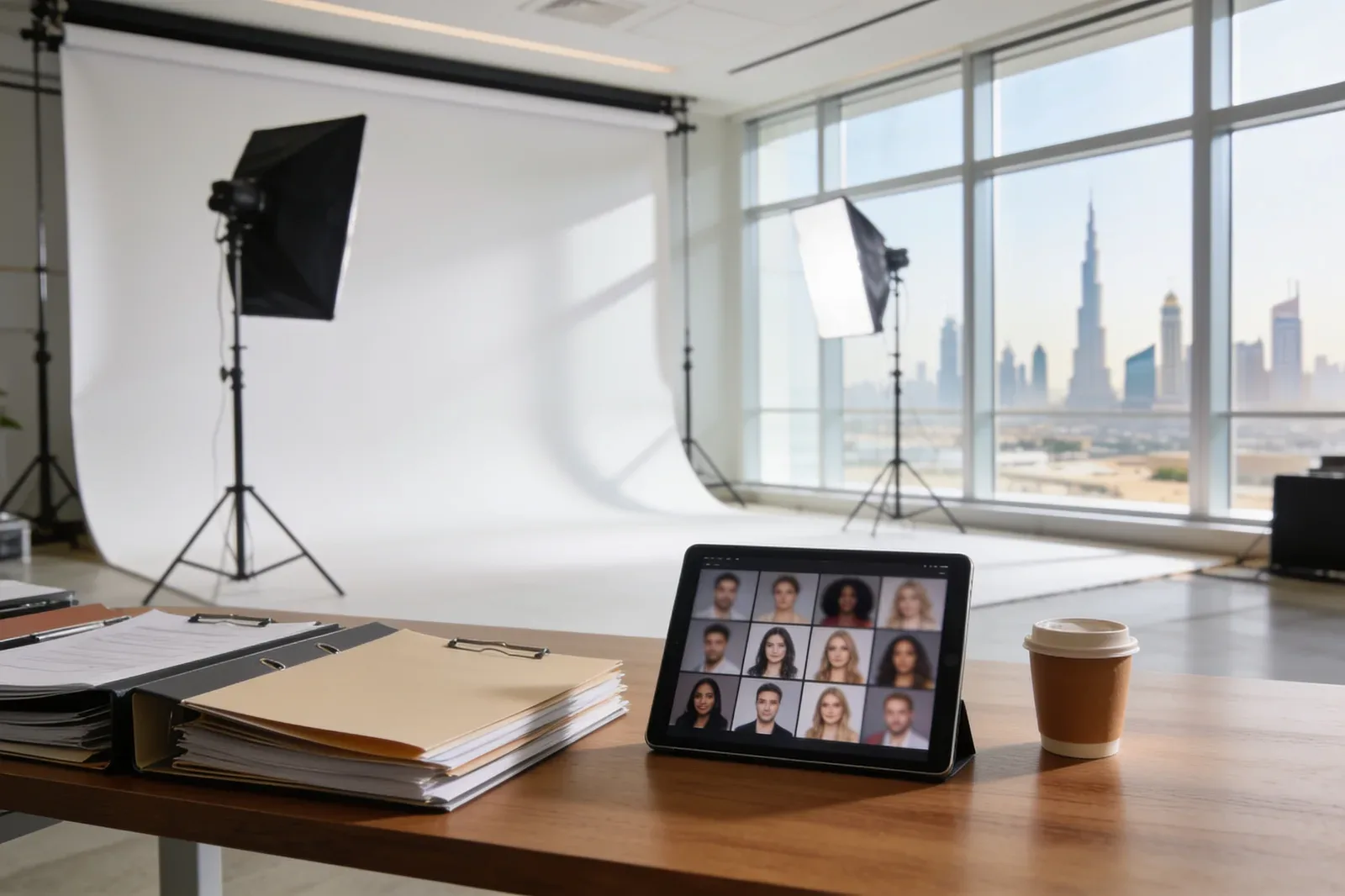
Digital portfolios are standard, but presentation quality counts. A slow-loading site or an Instagram feed cluttered with personal snapshots undermines professionalism. Curate publicly visible platforms to show work that aligns with your target casting.
Early in your career, invest in tests with photographers who understand Gulf lighting, location permits, and cultural context. This saves you from looking amateur on set later.
Organize your digital files for immediate access during castings. Clients rarely have time to scroll through unsorted galleries. Create separate folders or playlists for commercial, editorial, and modest fashion work. Ensure each image is high-resolution but optimized for fast loading on mobile devices, as many casting directors review submissions on phones between meetings. Keep contact details visible on every page or profile bio so interested parties can reach you without friction.
Navigating agency signings and scouting
Review contracts carefully before signing. Look for clear terms regarding accounting and payment schedules. Commission rates vary. Read every agreement carefully and compare terms across offices.
Approach agencies with materials ready. Submission methods differ by agency. Check each website for their specific application process. If you are already in the UAE on a visit or residence visa, state this, as it affects casting speed.
Be cautious of upfront fees for representation. Pressure to use specific photographers or long-term locks without performance clauses are also warning signs. Legitimate agencies typically earn from commissions on secured work rather than signing fees.
Some models work freelance, especially those with established client relationships. Freelancing demands self-administration of invoicing and permit verification. Agency representation simplifies logistics and typically provides wider casting access.
Scouts may approach models at malls, events, or via social media. Verify any scout's affiliation before sharing personal details. Real scouts identify themselves with agency credentials. They do not request payment.
Prepare a concise email template for agency applications that includes your measurements, location status, and links to three selected images rather than an entire portfolio. This respects the agent’s time while providing essential data. If you receive a reply, respond within twenty-four hours to demonstrate professionalism. Track your submissions in a simple spreadsheet to manage follow-ups and avoid duplicate emails to the same office, which can signal disorganization.
Visa and work permit realities
The UAE does not offer a dedicated fashion-model visa. Your permit route depends on the hiring entity and engagement structure. The UAE Ministry of Human Resources and Emiratisation (MOHRE) describes an employer-applied permit requiring an available electronic quota and valid establishment licence. Its temporary-work-permit service covers defined tasks for up to six months. MOHRE also lists a self-employment permit, though eligibility for specific modeling bookings varies.
Confirm the applicable authority and permit before accepting paid work. Working without proper documentation risks fines, deportation, and blacklisting.
Many models enter on visit visas and convert status once contracted. This is common but not automatic. The hiring entity must sponsor the permit application. Freelance models without a UAE-based sponsor face genuine difficulty working legally.
Health insurance is mandatory for residence visas. Factor this into financial planning and ask explicitly if the production or agency covers it.
Gather all personal documentation before initiating any permit application. You will need a passport valid for at least six months beyond your intended stay, recent passport-sized photographs meeting specific UAE standards, and educational certificates if required by the sponsoring entity. Have digital copies ready for rapid upload. Delays often occur due to missing paperwork or incorrect photo formats, so verifying these details early prevents stalled bookings.
Show dynamics and client expectations
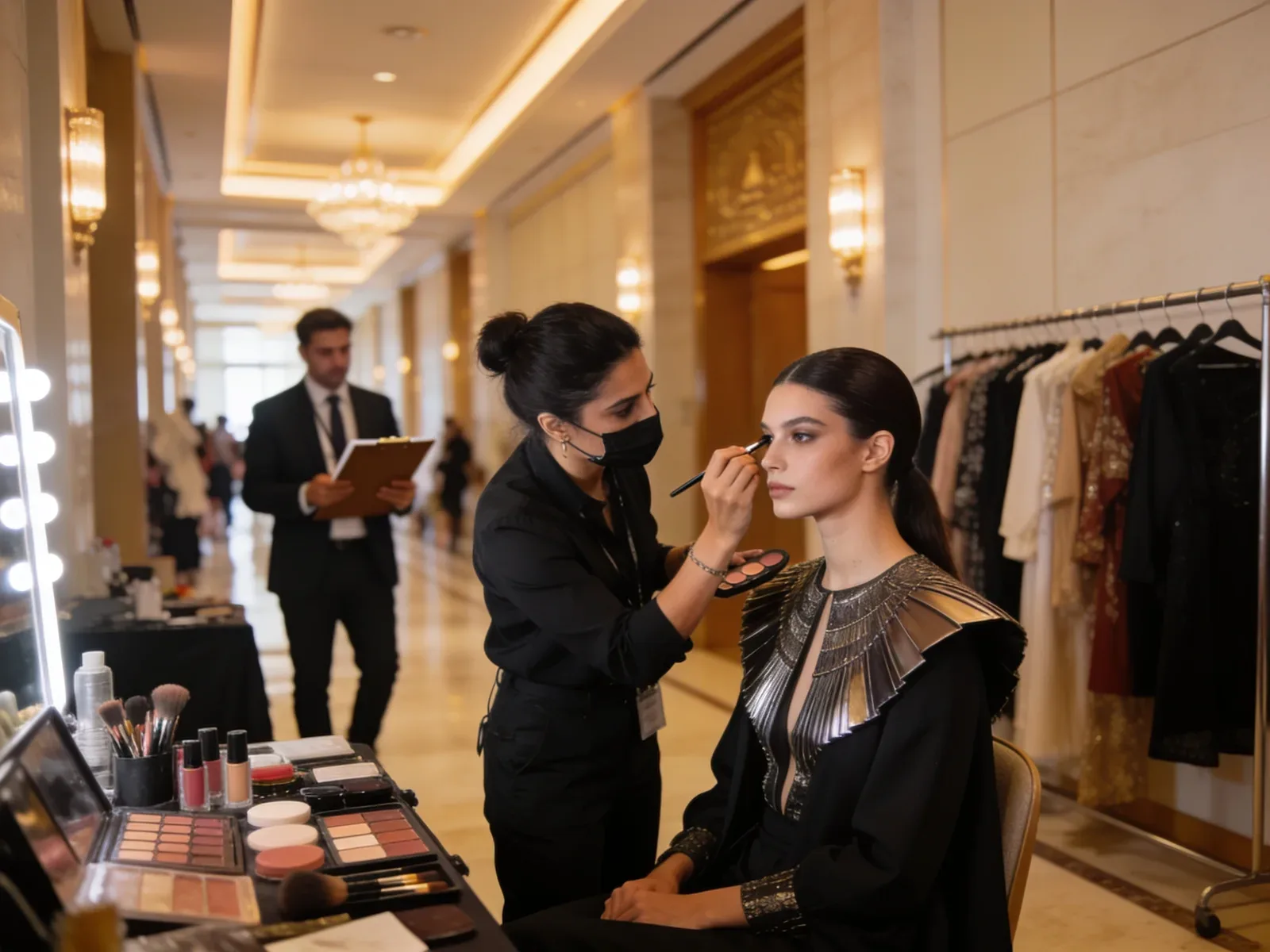
Dubai Fashion Week operates with compressed intensity. Fittings run late, call times are early, and backstage space can be tighter than European equivalents. Models who maintain composure under these conditions are rebooked.
Luxury brand campaigns often involve multi-location shoots across the emirate. Each location carries permit requirements and dress-code practicalities. Asking informed questions during briefings and respecting call sheet timelines makes you memorable for the right reasons.
Modesty protocols vary by client. Some productions provide styling teams for coverage adjustments. Others expect models to arrive with solutions like skin-toned underlayers. Discuss boundaries before the shoot, not during it. State your comfort range clearly and deliver fully within whatever range you accepted.
Social conduct matters in Dubai's compact industry. A rude attitude at one casting can reach other directors quickly. Conversely, helping with garment steaming and staying off phones backstage builds lasting reputations.
Commercial vs. editorial modeling
The split between commercial and editorial modeling in Dubai is sharp, though successful models often cross between them.
| Factor | Commercial modeling | High-fashion / editorial |
|---|---|---|
| Typical clients | Retail chains, telecoms, automotive, real estate | Luxury houses, regional designers, publications |
| Look preference | Relatable, approachable, diverse body types | Distinctive, taller and slimmer builds |
| Volume of work | Higher; steady bookings year-round | Lower; concentrated around fashion week |
| Portfolio needs | Bright smiles, lifestyle settings | Strong editorial tests, runway documentation |
| Income pattern | Day rates, usage fees, consistent | Higher per-day, less frequent, prestige value |
Most models arriving in Dubai should prepare for commercial work as their income base. Editorial assignments come with proven performance or distinctive looks. The modeling industry trends shaping 2026 Gulf fashion events suggest continued demand for faces that read as both globally current and regionally appropriate.
Networking and personal branding
Relationships drive bookings in Dubai's close-knit production community. Photographers recommend models to directors, and stylists suggest faces to casting agents.
Social media is a tool, not a strategy. Use it to show recent work and professionalism. Avoid over-posting personal content that dilutes your positioning. A feed mixing polished shots with complaints raises flags for conservative Gulf clients.
Industry events matter. Dubai Fashion Week's satellite programming, gallery openings at Alserkal Avenue, and design talks at d3 offer environments to meet collaborators. Follow up promptly with a brief message referencing your conversation.
Building relationships with photographers is particularly valuable. Many work across commercial and editorial, so one strong test can open multiple doors. Treat every creative on set as a potential career connection.
For longer-term positioning, understanding marketing in the Gulf fashion industry helps you speak the language of brand clients.
Maintaining professional conduct
Gulf clients place heavy emphasis on trust. A booking is often planned weeks in advance. A no-show damages your relationship with the client and the agency that sent you.
- Confirm in writingReconfirm shortly before the shoot date.
- Arrive earlyPlan to be there 15 minutes ahead of schedule.
- Bring a basic kitInclude nude undergarments, heels in two heights, touch-up makeup, water, and snacks.
- Stay accessibleKeep your phone charged but silent on set.
- Use namesLearn key crew members' names and address them directly.
Physical maintenance is part of professionalism. Dubai's climate is harsh. Hydration, sun protection, and consistent skincare prevent dehydration that shows on camera. Hair condition matters; hard water affects texture, so budget for quality maintenance.
Mental resilience is equally practical. Irregular income and constant evaluation wear on many people. Build routines that ground you: regular exercise, community outside the industry, and financial reserves for slow months.
Next steps for aspiring models
Start with honest self-assessment. Measure yourself against working models in your category. If your look and temperament fit Dubai's market, invest in portfolio development with Gulf-aware photographers. Research agencies thoroughly, submit professionally, and verify all permit questions before traveling.
Once in Dubai, treat every interaction as cumulative. The model who is pleasant at a go-see, prepared at a fitting, and adaptable on set builds a reputation that generates work without constant auditioning.
For talent scouts and agency representatives evaluating candidates, profiles that succeed show visual distinction plus operational reliability. The process of booking models for fashion shows in Dubai increasingly filters for these qualities as the market matures.