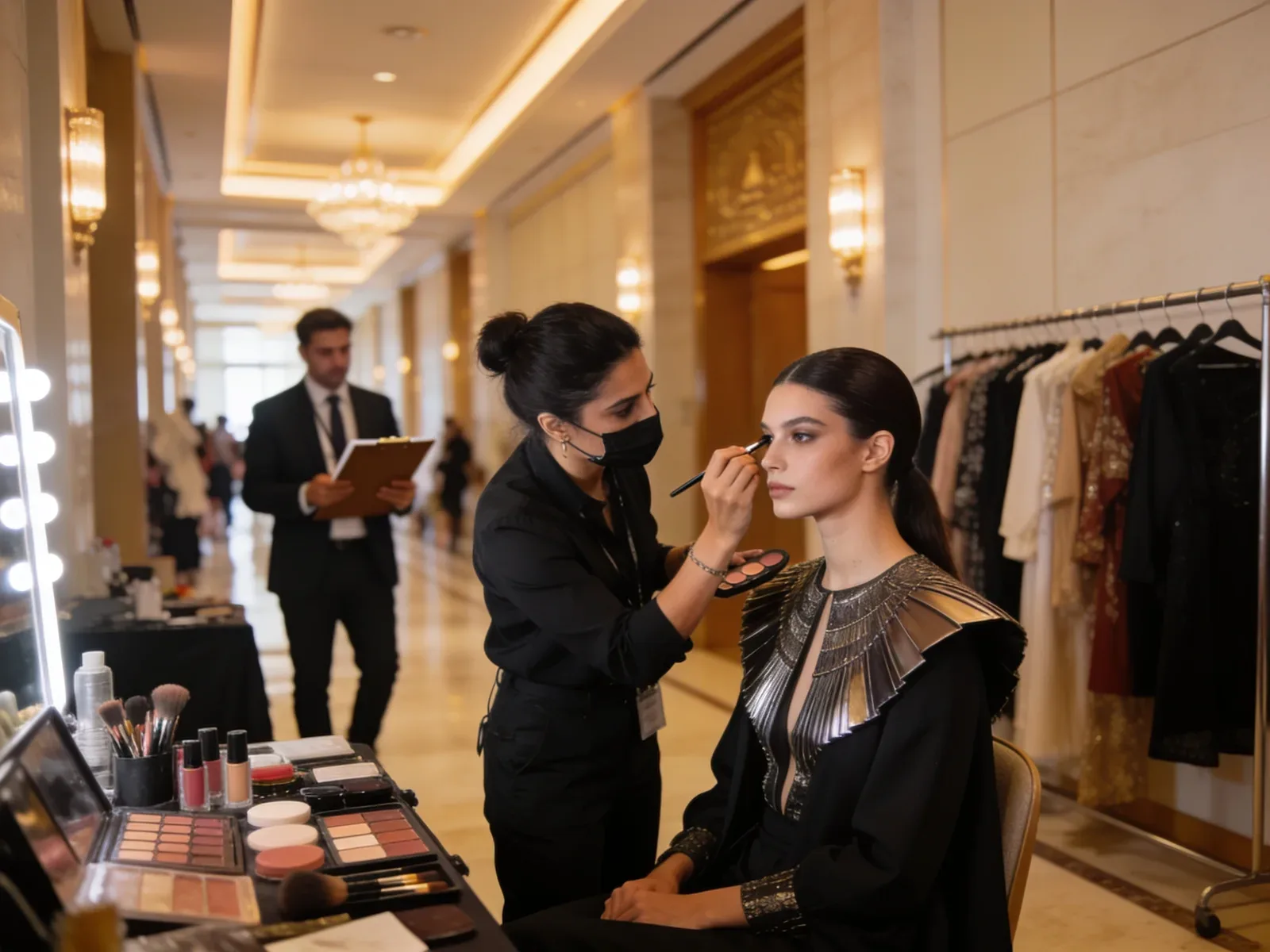
What makes a professional a professional in Dubai model casting

A professional casting process in Dubai rests on four consistent behaviours: reliability, clear communication, adherence to creative briefs, and ethical treatment of talent. Casting directors who build their workflows around these standards reduce no-shows, shorten selection cycles, and stay compliant with UAE labour and immigration rules.
What makes a professional a professional in casting contexts
The phrase "what makes a professional a professional" is not defined by any single UAE authority. In practice, it separates casting directors who treat selection as a managed process from those who rely on informal networks and last-minute decisions. The four pillars hold up across fashion weeks, commercial shoots, and corporate events.
Reliability means confirming dates, locations, and call times before talent is booked, then honouring them. Clear communication covers briefs, feedback, and payment terms shared in writing. Adherence to briefs protects the creative vision and the client's budget. Ethical treatment covers fair audition conditions, transparent selection criteria, and respect for personal boundaries. The Dubai Creative Clusters Authority Code of Guidance includes fairness and privacy provisions, though it is directed mainly at broadcasters and publishers rather than model casting specifically.
Agencies that model these behaviours attract repeat bookings from brands and better submissions from talent. Inconsistent communication, shifting requirements, or late payment damage reputations quickly in a market where word travels through tight professional circles.
Pre-casting preparation: defining briefs and budgets
Efficient casting starts before the first call goes out. A complete brief prevents wasted time for everyone involved and reduces the volume of unsuitable applications.
The brief-first workflow
Define role-related requirements and intended usage before any outreach begins. This includes:
- Physical requirements tied to the creative concept, not generic ideals
- Shoot or show format, schedule, and location
- Submission materials needed (digitals, walk videos, previous work)
- Selection stages and decision timeline
- Usage rights required (social media, print, regional or global)
One submission tracker, shared across the casting team, keeps decisions consistent and auditable. Shortlist against the criteria set at the start rather than comparing applicants against each other in isolation.
Budget planning in AED
Budget ranges vary significantly by project type. Commercial day rates and fashion-show fees operate on different scales and may not be directly comparable. Set your budget in AED, with USD references if the client operates internationally, and confirm whether the figure covers the model fee alone or also agency commission, travel, and accommodation.
Venue logistics and permits
Outdoor filming in Dubai requires advance planning. The Dubai Film and TV Commission filming guide addresses permits and the requirement to use a UAE-licensed production company. Script approval, where required, takes up to 25 business days according to DFTC script-approval guidance, and must precede the filming permit application. The permit itself has a timeline of one working day subject to location owners' approval. For feature films, the DFTC FAQ lists approval timelines of 10–15 working days; documentaries take 10–20 working days; TV series take 20–25 working days.
Pre-casting brief checklist
Creative direction and reference images; role-specific requirements (height, size, skills); shoot or show dates and location; submission deadline and required materials; budget range in AED with payment terms; usage rights needed; permit status for location; visa verification requirements for shortlisted talent.
Creating effective casting calls for the Dubai market
A casting call is both a creative brief and a legal document. Clarity at this stage filters out mismatched applicants and protects against disputes later.
Writing the call
State the project type, the look or skill required, and what the talent should submit. Avoid coded language that could read as discriminatory. Specify:
- Project title and client category (fashion, commercial, corporate)
- Shoot or event dates, including fittings and rehearsals
- Location, with transport details if outside central Dubai
- Compensation structure and payment timing
- Usage rights being acquired
- Whether the role is open to all nationalities or requires specific work authorization
The UAE Government portal on preparing to work makes clear that working while holding a visit or tourist visa is strictly prohibited. Your casting call should signal that work authorization will be verified before booking, without discouraging eligible applicants.
Distribution channels
Dubai sits at the intersection of regional and global talent markets. Local agency rosters provide pre-vetted options with established contract frameworks. International platforms extend reach but add complexity around visa status and time-zone coordination. Many casting directors use a hybrid: local agencies for speed, global outreach for specialised looks.
Managing applicant volume
High-response calls bury strong candidates. Use a submission form with required fields rather than open email applications. Set a clear deadline and communicate that late submissions will not be reviewed.
Streamlining interviews and auditions
Time is the scarcest resource in casting. Efficient audition design respects both the talent's schedule and the production's timeline.
Remote pre-screening
Digital tools for remote pre-screening save substantial time. Request self-tapes or live video calls before inviting anyone to in-person auditions.
Review submissions against the criteria established in your brief, not against each other in isolation. Record notes immediately; memory degrades after the first dozen applicants.
In-person audition etiquette
Run auditions on schedule. Provide a private changing area, water, and a clear explanation of what will happen during the session. Photograph or film only with explicit consent, and state how that material will be used. The Dubai Creative Clusters Authority Code of Guidance includes privacy provisions that align with professional practice even if they do not mandate specific audition procedures.
Evaluating presence beyond static photos
Still portfolios show appearance; auditions reveal movement, responsiveness to direction, and temperament. Build a short directional exercise into every in-person session: ask the model to adjust their expression or posture based on real-time feedback. Note who adapts quickly and who resists. These qualities matter as much as physical fit for live presentations and corporate events where models and hostesses represent the brand directly.
Assessing model suitability and diversity
Selection balances commercial appeal, artistic vision, and cultural context. Dubai's market serves both regional Gulf audiences and international brands, so the definition of "right for the brief" varies by client.
Cultural sensitivities in the Gulf
Modesty requirements vary by client and sector. Some campaigns require shoulders covered; others are fully contemporary. The casting call should state any constraints explicitly so talent can self-select. During assessment, respect religious and cultural practices without making assumptions: ask about prayer time needs, dietary requirements, or comfort with specific wardrobe choices, then accommodate what you learn.
Dubai's consumer base includes Emirati nationals, Arab expatriates, South Asian communities, East Asian residents, Europeans, and Africans. Brands that use professional models to improve brand image increasingly recognise that homogenous casting limits market connection.
Balancing commercial and artistic criteria
The creative director may favour an unconventional look; the client may prioritise recognisable appeal. Resolve this tension before auditions begin by agreeing on weighted criteria. Document the decision rationale for shortlisted candidates to defend selections if challenged.
Legal and contractual considerations in the UAE
UAE labour and immigration law governs how talent can be engaged, and the rules differ for employees, freelancers, and visitors. No single source establishes a complete model contract checklist, so casting directors must assemble compliance from multiple official references.
Visa and work permit verification
The UAE Government portal states that expatriates must obtain an entry permit and residency visa, and that working while holding a visit or tourist visa is strictly prohibited. The Abu Dhabi Residents Office notes that Freelance Visa eligibility requires a freelance work permit from MOHRE. Specific permit categories and requirements vary by emirate and engagement type, so verify current regulations with relevant authorities.
- Request documentationAsk shortlisted talent or their agency for visa status and work authorization before confirming the booking.
- Check permit scopeVerify that the permit covers the specific activity (modelling, presenting, performing) and is not restricted to another sector.
- Confirm employer or sponsorIdentify whether the talent is sponsored by an agency, a free-zone company, or holds independent freelance status.
- Document the checkRetain a record of what was verified and when, for audit purposes if questions arise later.
When in doubt, consult a UAE-licensed legal advisor. The rules change, and the cost of non-compliance exceeds the cost of proper verification.
Contract clauses for model releases
- Scope of work: dates, hours, location, specific services
- Usage rights: media (print, digital, social), territory, duration, exclusivity if any
- Payment: fee, expenses, currency, timing, and method
- Cancellation terms: notice required, kill fees, weather or force majeure provisions
- Model release: consent to use images, with any restrictions stated
- Dispute resolution: governing law and jurisdiction
Image usage, exclusivity, overtime, cancellation, and agency commission rules depend on the specific engagement and applicable UAE laws. Tailor clauses to the specific engagement and have contracts reviewed by qualified local counsel.
Compliance with UAE labour law
Freelancers and employees fall under different frameworks. Freelancers with proper permits operate as independent contractors; those without valid authorization cannot legally perform work. Employees are subject to standard labour law protections. Misclassification risks penalties for the hiring party. The DFTC filming permit terms and conditions require compliance with UAE media standards and address prohibited content; these are production obligations that intersect with talent engagement practices.
Maintaining professional communication with agents and talent
Respectful, efficient communication distinguishes professional casting directors and builds long-term relationships with agencies representing fashion show talent in Dubai.
Respond to submissions within stated timeframes, even with a brief rejection. Provide specific feedback when requested, framed constructively. Confirm all terms in writing before talent travels to set. Pay on time, and if delays occur, communicate proactively rather than waiting for follow-up.
For agents, share briefs fully at the outset rather than revealing requirements incrementally. This allows accurate representation and reduces back-and-forth. Respect exclusivity agreements and do not circumvent agencies to poach talent directly.
Key practices for professional casting in Dubai
- Build every casting on a written brief with defined criteria, budget, and timeline
- Verify visa and work authorization before confirming any booking
- Use remote pre-screening to filter efficiently before in-person auditions
- Design contracts covering usage rights, payment, and cancellation with local legal review
- Communicate clearly and promptly with both agents and talent at every stage
- Respect cultural contexts and accommodate diverse talent pools appropriately
Next steps for casting directors
Audit your current process against the brief-first workflow described here. Identify where information is shared informally rather than documented, where visa checks happen after selection rather than before, and where communication delays create uncertainty. Address one gap at a time. For productions requiring location permits, build the DFTC timeline into your project schedule from day one. The directors who treat casting as a disciplined operation, not a reactive scramble, are the ones who consistently deliver the right talent on time and on budget.